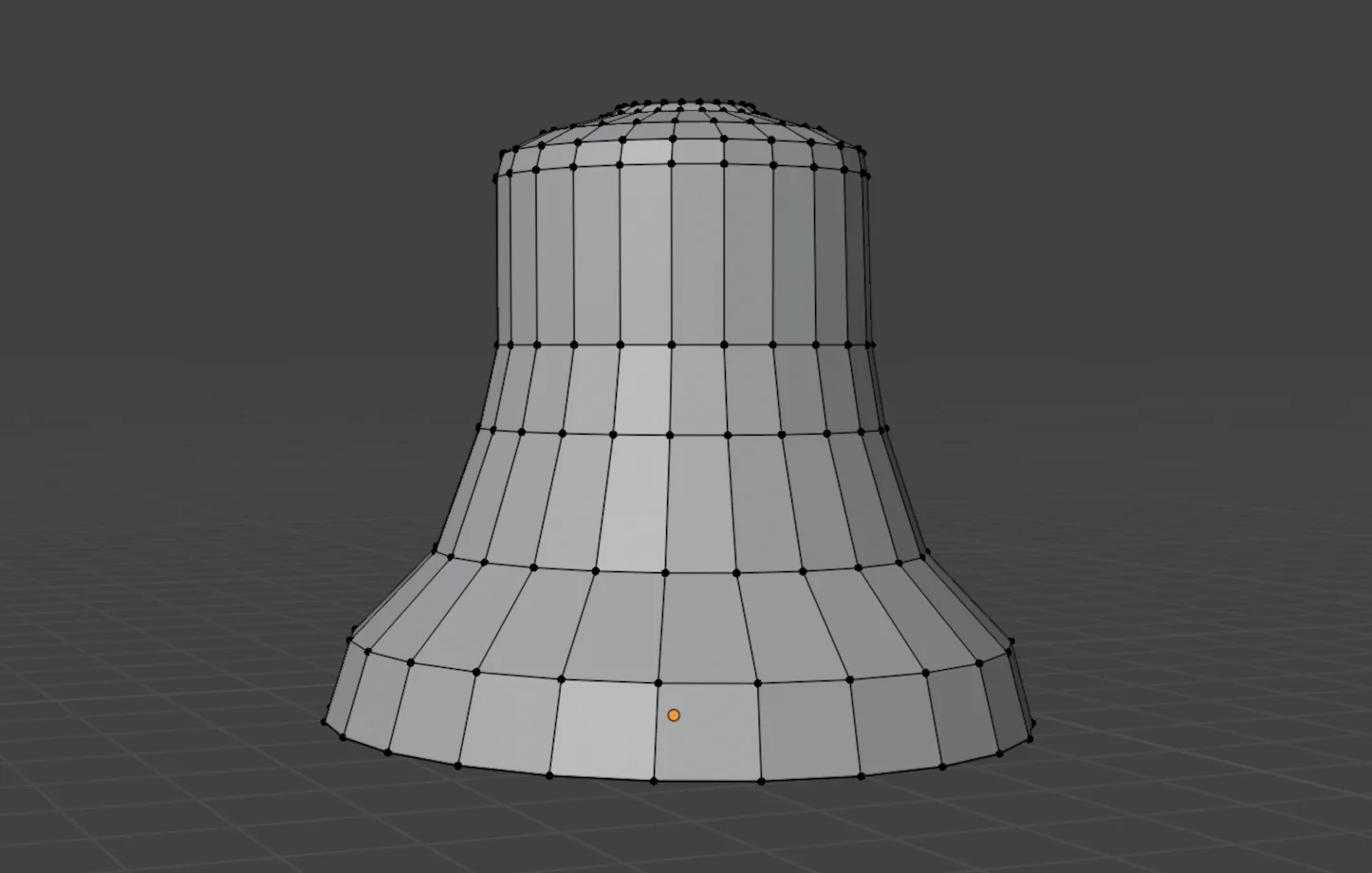
Bellfounding (2024) reworks The Bells by William Byrd (c.1540–1623) for clavichord and electronics. It is the second composition in an ongoing series for clavichord and electronics, BEBUNG.
Bellfounding transplants a classic technique from electronic music—ring modulation, which creates metallic, bell-like timbres by combining two audio signals—into a musical score. Rather than processing audio, the pitches of the score are subjected to the same mathematical operation, generating new harmonic material with the characteristic resonance of bells. This score-based application of ring modulation was pioneered in notated music by composers of so-called ‘spectral music’ in the 1980s.
During performance, the clavichordist plays the ring-modulated score-fragments of Byrd’s original composition, recording them live and passing them to a machine learning agent (Dicy2 from IRCAM) in Max. As the recorded buffer grows, the computer begins returning fragments of Byrd’s composition as synthesised bell sounds through a four-channel audio system.
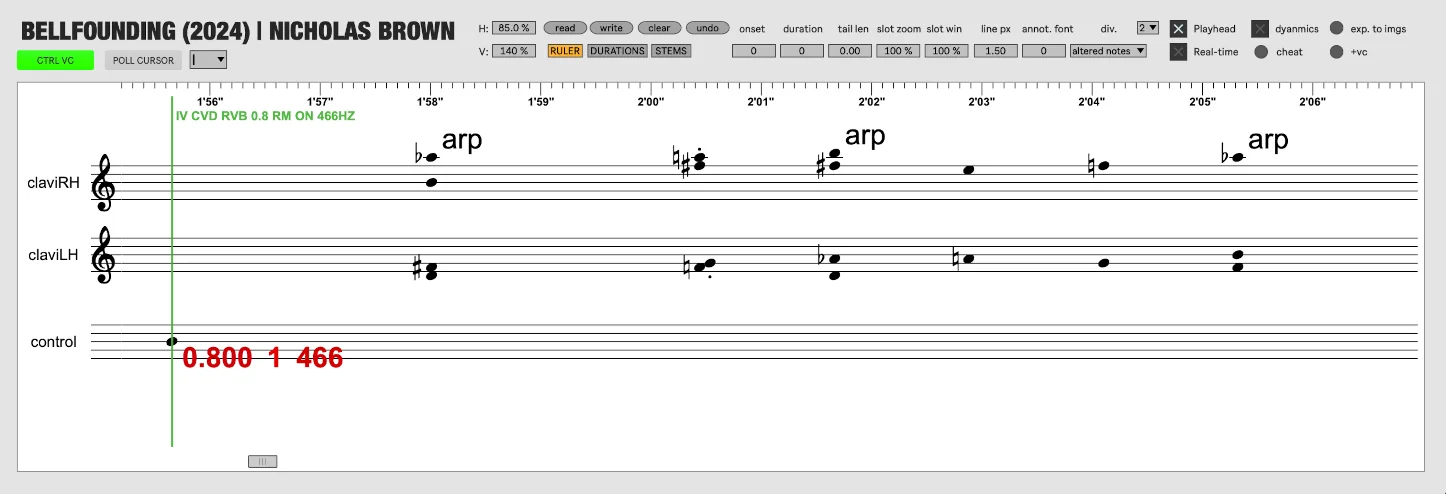
Bellfounding received its first performance in a solo recital at the University of Surrey, March 2024. For more information about the BEBUNG series, click here.
Technical Requirements for Performance:
- Four full-range loudspeakers surrounding performance area (FL, FR, RL, RR at corners of performance space).
- Small table and piano stool for clavichordist
- TRS cabling and 3 × 240VAC power outlets to table