BEBUNG (2022-)
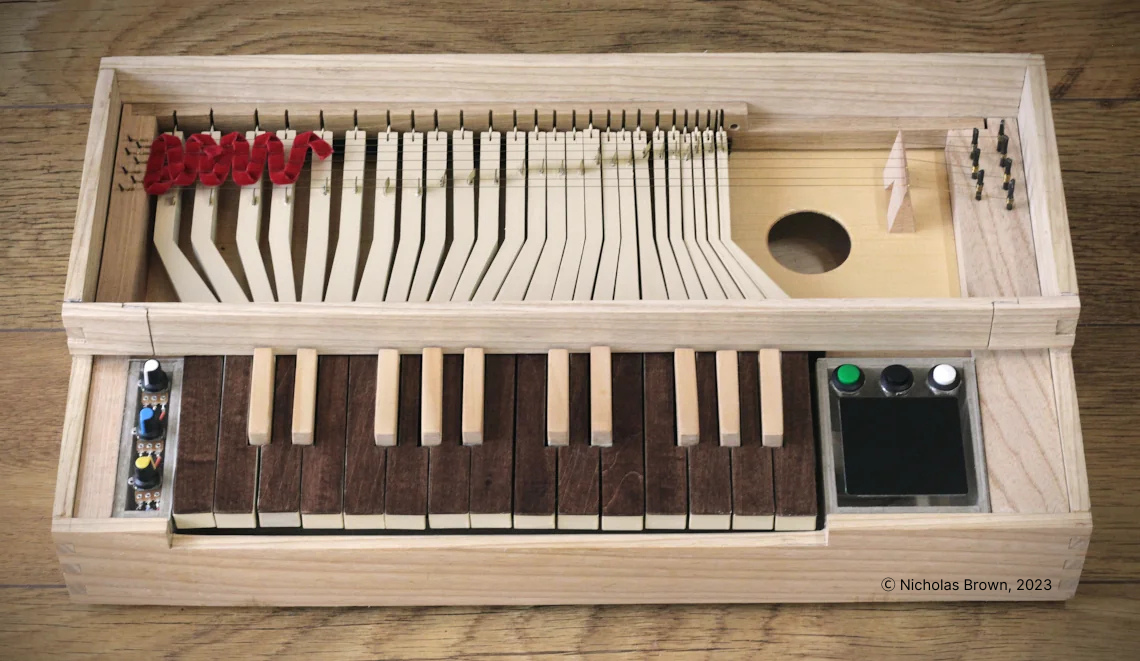
Nicholas Brown’s Bebung project investigates how digital technologies can extend the expressive and functional possibilities of a clavichord. In 2023 he designed and built a hybrid instrument that integrates contemporary computer hardware into a fifteenth-century technology and supports experiments with machine learning in live performance.
Following the design and build process, Nicholas began writing a series of compositions for the instrument under the collective title BEBUNG. Each work explores a different facet of the instrument’s potential. The project began in 2022 and was supported by a grant from Arts Council Ireland.

Compositions in the Bebung series
Talks, Workshops & Live Performances

Recent presentations and performances
- EPFL Lausanne, Switzerland. Performance of Bellfounding, Ghent, February 2025.
- University of Limerick (DMARC). Talk and performance in experimental music series, November 2024.
- University of Surrey, UK. Two-day residency: talk, workshop and lunchtime concert, March 2024.
- Historical Keyboard Summer Academy, Ghent, Belgium. Talk and demonstration, July 2023.
Talk and workshop formats
Lunchtime concert (40 mins)
This programme combines live performance, improvisation and works from the Bebung series. It can be adapted to different venues and contexts.
Bellfounding (2024)
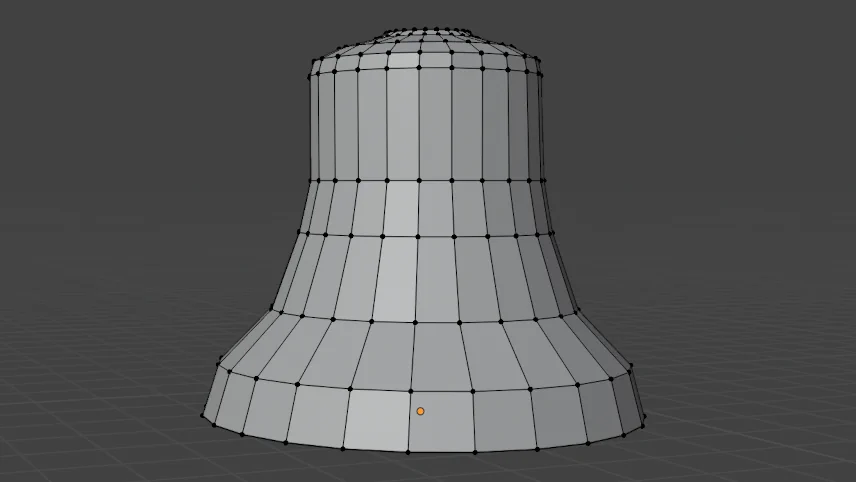
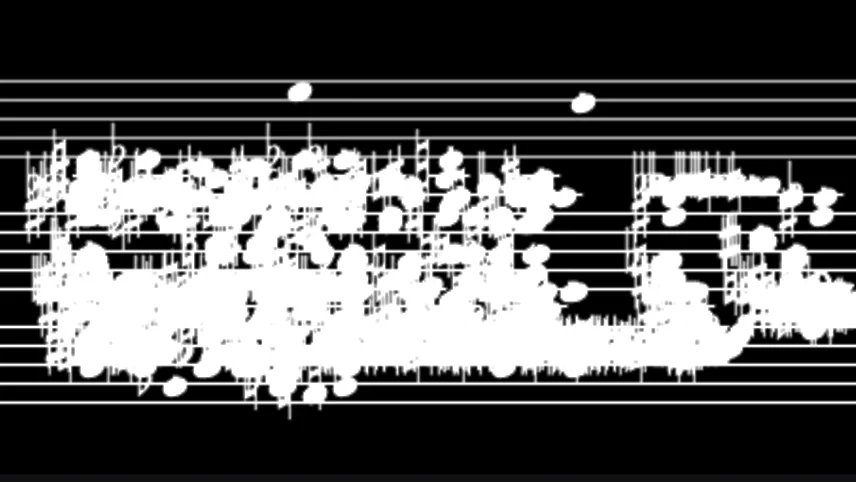
Bellfounding (2024) presents a reworking of William Byrd’s keyboard piece, The Bells. It uses a compositional approach pioneered in spectral music, namely the use of ring modulation, a classic technique in electronic music that produces sounds with a metallic quality, in a score-based context.
During the performance, the clavichordist plays ring-modulated score fragments of Byrd’s original composition. These fragments are recorded live and passed to a machine learning agent (Dicy2 from IRCAM) in Max software. As the performance proceeds, the AI listens and is trained on this growing buffer of live audio. Fragments of Byrd’s composition start to be played back through the four-channel audio system in the form of synthesised bell sounds.
Yarn (2024)
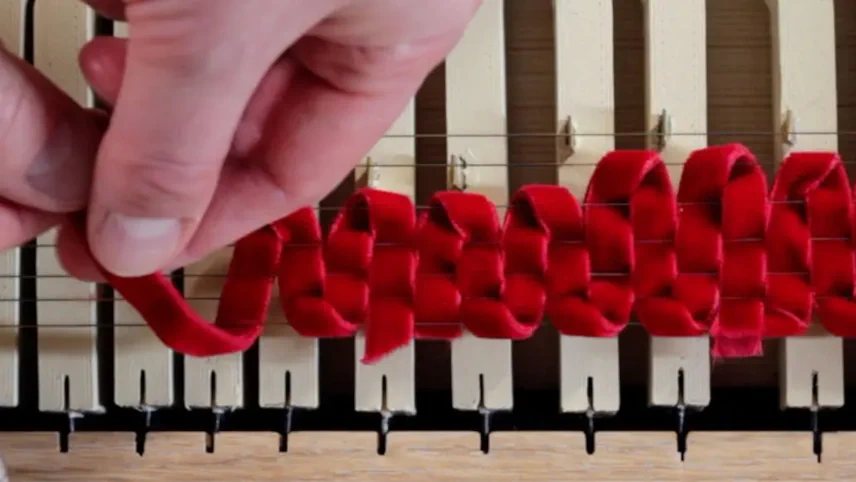
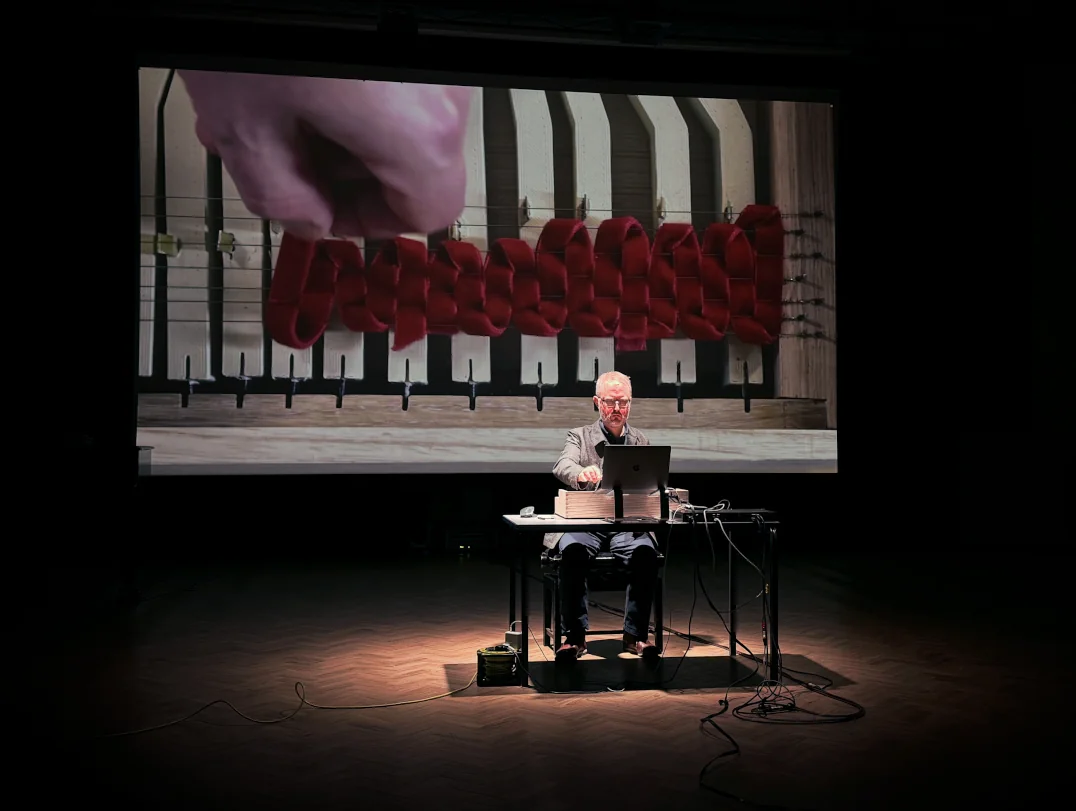
Yarn (2024) concerns the “listing” that is woven between the brass strings of the clavichord. The function of listing is: i) to dampen the vibrating string once the key is released and ii) to prevent a section of the string from vibrating when the small brass tangent hits the string.
Yarn presents the clavichord in an audio visual context, as if it were a textile loom, with its brass strings as the warp and its listing as the weft. In composing the piece, a video recording was made of the listing being applied to the instrument. The sound element of the video was transcribed into musical notation using a sine-wave model from Ears, the recent addition to the Bach family of computer-aided composition tools in Max.
An edition of this transcription is performed live alongside the video. It requires the performer to engage directly with the seven brass strings. The sound of the video is thus returned to its images, mediated by the materiality of the sound-making object.
An Instrument in Dialogue with the Circumstances of its Construction (2023)
An Instrument in Dialogue with the Circumstances of its Construction (2023) was the first piece to be written for the newly built instrument. The composition was supported by Arts Council Ireland and marks the end of the first phase of Brown's Bebung Project. The musical structure is based on a transcription of the sound of a 3D printer fabricating the twenty five key levers of the clavichord.
The frequent shifts between moods in performance derive from my continuing interest in the compositions of C. P. E. Bach, specifically his trio sonata of 1749, Dialogue between a Melancholicus and Sanguineus. This dialogic nature of the composition is aided by live interaction with a machine learning agent (IRCAM’s Dicy2). The clavichord’s functionality is further extended by a Trill (Bela) touch sensor controlling software from the Fluid Corpus Manipulation (FluCoMa) project.
The composition is also informed by my recollections of the sonic landscape of 8 bit computing in the 1980s, including the chirping of cassette based software being loaded to a Commodore 64 and the rattling of a dot matrix printer.
For enquiries about performances and workshops, please email: .